War Made Invisible – How America Hides the Human Toll or Its Military Machine


Recent Articles:
- How Hakeem Jeffries and J Street Teamed Up for Arming Genocide
- House Democrats are finally shifting on Israel. Party leaders must listen
- Politicians Should Stop Hiding Behind the “Two-State Solution” Fantasy
- Today’s cautious AOC would not have endorsed the AOC of 2018
- My Conversation With Karl Marx About Donald Trump
-
Why the Buttigieg Campaign Tried to Have Me Arrested for Handing Out Information About Medicare for All
By Norman Solomon
You’d think that a presidential campaign backed by 40 billionaires and untold numbers of bundled rich people wouldn’t worry about just one leaflet on Medicare for All.
But minutes after Pete Buttigieg finished speaking in an auditorium at Keene State College in New Hampshire on Saturday, a Pete for America official confronted me outside the building while I was handing out a flier with the headline “Medicare for All. Not Healthcare Profiteering for the Few.”
“You can’t pass that out,” the man told me. I did a double take, glancing at the small “Pete” metal badge on his lapel while being told that he spoke on behalf of the Buttigieg campaign.
We were standing on the campus of a public college. I said that I understood the First Amendment. When I continued to pass out the flier, the Buttigieg campaign official (who repeatedly refused to give his name) disappeared and then quickly returned with a campus policeman, who told me to stop distributing the leaflet. Two Keene city police soon arrived.
The Buttigieg official stood a few feet behind them as the police officers threatened me with arrest for trespassing. Ordered to get off the campus within minutes or be arrested, I was handed an official written order (“Criminal Trespass Notice”) not to set foot on “Keene State College entire campus” for a year.
So much for freedom of speech and open election discourse in public places.
Why would a representative of the mighty Buttigieg campaign resort to such a move? A big clue can be found in a deception that Buttigieg engaged in during the debate on Friday night.
Buttigieg’s dishonesty arose when Amy Klobuchar, a vehement foe of Medicare for All, attacked Bernie Sanders for allegedly seeking to “kick 149 million Americans off their current health insurance in four years.” Klobuchar was reciting a key insurance-industry distortion that neglects to mention how a single-payer system would provide more complete health coverage, at less cost — by eliminating wasteful bureaucracy and corporate profiteering.
But Klobuchar then pivoted to attack Buttigieg: “And Pete, while you have a different plan now, you sent out a tweet just a few years ago that said henceforth, forthwith, indubitably, affirmatively, you are for Medicare for All for the ages, and so I would like to point out that what leadership is about is taking a position, looking at things, and sticking with them.”
Buttigieg was far from candid in his response: “Just to be clear, the truth is that I have been consistent throughout in my position on delivering healthcare for every American.”
That answer directly contradicted an early 2018 tweet from Buttigieg: “Gosh! Okay. . . I, Pete Buttigieg, politician, do henceforth and forthwith declare, most affirmatively and indubitably, unto the ages, that I do favor Medicare for All, as I do favor any measure that would help get all Americans covered.”
No doubt if the flier I was handing out at Keene State College had praised Buttigieg, his campaign would not have called the police to have me ejected. But the Buttigieg for President staffer recognized that Buttigieg’s spin on healthcare was undermined by facts in the flier (produced and financed by RootsAction.org, which is completely independent of the official Sanders campaign).
“Buttigieg is claiming that Medicare for All would dump people off of health coverage and deprive them of ‘choice,’” our flier pointed out. “Those are insurance-industry talking points. He is deliberately confusing the current ‘choice’ of predatory for-profit insurance plans with the genuine full choice of healthcare providers that enhanced Medicare for everyone would offer.”
Apparently, for the Buttigieg campaign, such truthful words are dangerous.
Norman Solomon is cofounder and national coordinator of RootsAction.org. He was a Bernie Sanders delegate from California to the 2016 Democratic National Convention. Solomon is the author of a dozen books including War Made Easy: How Presidents and Pundits Keep Spinning Us to Death.
-
DNC in Disarray While the Sanders Campaign Gains Momentum
By Norman Solomon
As a center of elite power, the Democratic National Committee is now floundering. Every reform it has implemented since 2016 was the result of progressive grassroots pressure. But there are limits to what DNC Chair Tom Perez is willing to accept without a knock-down, drag-out fight. And in recent weeks, he has begun to do heavy lifting for corporate Democrats — throwing roadblocks in the way of the Bernie 2020 campaign as it continues to gain momentum.
The fiasco in Iowa, despite its importance, is a sideshow compared to what is foreshadowed by recent moves from Perez. For one thing, he appointed avowedly anti-Bernie corporate operatives to key positions on powerful DNC committees. The flagrant conflicts of interest have included entrenching paid staffers for Michael Bloomberg’s presidential campaign on rules committees for the DNC and the upcoming Democratic National Convention.
Perez soon followed up by abruptly changing the official rules to allow Bloomberg to participate in the debate scheduled for three days before the Feb. 22 Nevada caucuses. The egregious decision to waive the requirement for large numbers of individual donors rolled out the blue carpet for Bloomberg to the debate stage.
“Now suddenly a guy comes in who does not campaign one bit in Iowa, New Hampshire, he’s not on the ballot I guess in Nevada or South Carolina, but he’s worth $55 billion,” Sanders said Thursday when asked about the rules change. “I guess if you’re worth $55 billion you can get the rules changed for a debate. So, to answer your question: I think that is an absolute outrage and really unfair.”
Inconvenient facts — such as the reality that Bloomberg fervently endorsed President George W. Bush for re-election in 2004 (in a speech to the Republican National Convention, no less) or that as mayor of New York he championed racist stop-and-frisk police policies — are less important to party chieftains than the humongous dollar signs that self-financing Bloomberg is bringing to the table.
The mayors of San Francisco, Washington, Anchorage and Albany, among others, have already succumbed to Bloomberg’s wealthy blandishments and endorsed him, as has former Black Panther and longtime disappointment Congressman Bobby Rush. To corporate elites, the moral of the sordid Bloomberg story is that most people can be bought, and Bloomberg might be the deus ex machina to lift them out of an impending tragedy of Sanders as nominee.
The glaring subtext of all this is the now-frantic effort to find some candidate who can prevent Sanders from becoming the party’s nominee at the national convention in July. Early corporate favorites like Beto O’Rourke, Cory Booker and Kamala Harris fizzled and flamed out. Joe Biden appears to be sinking. Amy Klobuchar staked her hopes on Iowa without success. That appears to leave Pete Buttigieg and Bloomberg as the strongest corporate contenders to prevent the corporate Democrats’ worst nightmare — the nomination of an authentic progressive populist.
A traditional claim by corporate Democrats — the assumption that grassroots progressive campaigns are doomed — is oddly matched by the assumptions of right-wing media and some on the left that the DNC can successfully rig just about anything it wants to. Fox News has been feasting on the Iowa meltdown, pleased to occasionally invite leftists on the air to denounce the DNC, immediately followed by routine denunciations of Democrats in general and Sanders in particular as diabolical socialists eager to destroy any and all American freedoms with a collectivist goal of tyranny.
Meanwhile, some progressives have such an inflated view of the DNC’s power that they propagate the idea that all is lost and Bernie is sure to be crushed. It’s the kind of defeatism that’s surely appreciated by right-wingers and corporate Democrats alike.
Perhaps needless to say, if Bernie Sanders had such a fatalistic view of electoral politics, he never would have run for president in the first place. People on the left who say the DNC’s elite power can’t be overcome with grassroots organizing are mirroring the traditional scorn from corporate Democrats — who insist that the left can never dislodge them from dominance of the party, let alone end corporate dominance of the nation.
Like millions of other progressives who support Bernie 2020, I realize that the forces arrayed against us are tremendously powerful. That’s the nature of the corporate beast. The only way to overcome it is to organize and fight back. That’s what the movements behind the Sanders campaign are doing right now.
In the words of a Latin American graffiti writer, “Let’s save pessimism for better times.”
Norman Solomon is cofounder and national coordinator of RootsAction.org. He was a Bernie Sanders delegate from California to the 2016 Democratic National Convention. Solomon is the author of a dozen books including "War Made Easy: How Presidents and Pundits Keep Spinning Us to Death."
-
Iowa Fiasco Raises the Stakes for New Hampshire, Where Sanders Could Win Big
By Norman Solomon
While journalists pick through the ashes of the Iowa caucuses meltdown, thousands of progressive activists are moving forward to make election history in New Hampshire. In sharp contrast to the prattle of mainstream punditry, the movements behind Bernie Sanders are propelled by people who engage with politics as a collective struggle because the future of humanity and the planet is at stake. As a result, the Granite State’s primary election on Feb. 11 could be a political earthquake.
Whether or not the Democratic Party’s corporate backers truly understand what progressive populism is all about, they’re determined to crush its strongest electoral manifestation in our lifetimes — the Bernie 2020 campaign. And, since the bottom fell out of Iowa’s capacity for dramatic political impact, New Hampshire now looms larger than ever.
Monday night’s collapse of the caucus vote-counting process in Iowa has amped up the spotlight on — and political consequences of — what will happen in the New Hampshire primary. A clear Sanders victory would make him the frontrunner for the Democratic presidential nomination.
Perpetuating passivity is a key undercurrent when corporate media report on election campaigns. Routinely, the coverage is rendered as entertainment, historic events to be individually consumed rather than collectively created. Progressive social movements have the opposite approach.
Propagandistic attacks on Sanders and his campaign are likely to reach new depths between now and the New Hampshire election. Effectively countering the distortions and smears will require concerted individual efforts on a large scale.
Full disclosure: As an active Bernie supporter, I’m part of an expanding team set to do independent on-the-ground outreach in New Hampshire until Election Day. (Information available: nh@rootsaction.org.)
Whatever its budget or priorities, no presidential campaign can possibly maintain a presence in every neighborhood to do what ideally would be done. The success of the Sanders campaign depends on supporters taking the initiative rather than waiting for a national campaign to fill the gaps.
I often think about how Bernie used the opportunity to make a closing statement at a Democratic presidential debate last June. Instead of tooting his own horn and touting his leadership, he got to the core of terrible realities that won’t change unless people organize effectively from the grassroots.
After reeling off a few lowlights of the status quo — “for the last 45 years wages have been stagnant for the middle class. . . we have the highest rate of childhood poverty. . . 45 million people still have student debt” — he asked: “How can three people own more wealth than the bottom half of America?” Then he closed by saying: “And here is the answer. Nothing will change unless we have the guts to take on Wall Street, the insurance industry, the pharmaceutical industry, the military industrial complex, and the fossil fuel industry. If we don’t have the guts to take them on, we will continue to have plans, we will continue to have talk, and rich will get richer and everybody else will be struggling.”
Whether they agree with Bernie or not, people widely understand that he absolutely means what he says. And that helps to explain why, during the next seven days, in national media and across New Hampshire, corporate forces will be in overdrive to prevent a Bernie Sanders victory in the New Hampshire primary.
It’s not mere happenstance that the sound system at a Bernie rally often blasts out the song “Power to the People” as he takes the stage. Only the power of people, determined and mobilized, can overcome the forces arrayed against the Bernie Sanders campaign and the movements supporting him at this pivotal historic moment.
Norman Solomon is cofounder and national coordinator of RootsAction.org. He was a Bernie Sanders delegate from California to the 2016 Democratic National Convention. Solomon is the author of a dozen books including War Made Easy: How Presidents and Pundits Keep Spinning Us to Death.
-
The Creation Myth of the Buttigieg Campaign
By Norman Solomon
This weekend, Pete Buttigieg told supporters that he became a viable candidate for president “on the strength of our vision” and “the urgency of our convictions.” Such rhetoric fits snugly into a creation myth about his campaign that Buttigieg has been promoting since early 2019.
Summing up the gist of that myth, Buttigieg began this year by standing at a whiteboard and looking into a camera while he talked about the genesis of his run for the presidency. “We launched as an exploratory committee, not even a full year ago, with a few volunteers, zero dollars in the bank,” he said — and “without the personal wealth of a millionaire or a billionaire.”
And Buttigieg offered reassurance to those concerned about big money in politics, saying: “What we built in 2019 we were able to put together without any contributions from federal lobbyists, or from fossil-fuel executives, and not one dollar from corporate PACs.” But, as Aldous Huxley wrote in the introduction to his classic novel of dystopian technocracy, Brave New World, “the greatest triumphs of propaganda” are accomplished by maintaining “silence about truth.”
Buttigieg has remained silent about what made the ascent of his campaign possible — the early, major and continuing support from extremely rich people enmeshed with powerful and destructive corporate interests — enabling the Pete for America campaign to get off the ground and gain altitude. Buttigieg’s rise was propelled by the rocket fuel of funding from — and bonding with — wealthy corporate operators, who bundled big checks from other donors and provided an establishment seal of approval that resonated with mainstream media.
The deft spin from the Buttigieg apparatus and the huge media hype about him have obscured the significance of his deep-pocketed backers. Key information about those ties has rarely gotten into the mass-media echo chamber. Yet, occasional reports have offered a window into the big-money support for Buttigieg that he is eager to leave unmentioned.
Buttigieg may have started his presidential campaign a year ago “with a few volunteers” and “zero dollars in the bank” — but it wasn’t long before plenty of millionaires and billionaires flocked to back him with their own money and piles of checks from wealthy associates.
“Pete Buttigieg Is the Only Top 2020 Democrat Taking Money from Lobbyists,” HuffPost reported in April. “Buttigieg’s campaign said the donations wouldn’t influence his policy positions and noted he isn’t taking donations from corporate PACs or fossil fuel interests.” Later, the Center for Public Integrity explained in mid-summer, Buttigieg “reversed his stance and refunded more than $30,000 from federal lobbyists. . . . But Buttigieg has nonetheless continued to rely on wealthy and well-connected ‘bundlers’ to help him fundraise — and to great effect, raising more money of late than most other 2020 presidential candidates.”
As summer began, Buttigieg’s star was ascending on Wall Street. There, the New York Times reported, “donors are swooning over Mr. Buttigieg enough to open their wallets and bundling networks for him.”
By October, under the headline “Pete Buttigieg Takes Lead as Big Business Candidate in 2020 Field,” Fortune magazine was reporting that “when it comes to opening hearts (and wallets) of business leaders across America, Buttigieg is shining.”
It was the middle of October when Buttigieg defended his reliance on big donors with a memorable comment: “We’re not going to beat Trump with pocket change.” However, as Common Dreams pointed out, “Critics noted that (Bernie) Sanders and (Elizabeth) Warren are the top fundraisers of the Democratic primary, raising $46 million and $35 million mainly through small donations.”
In early November, the Washington Post reported that “Wall Street donors have a new favorite candidate in the 2020 Democratic presidential field: Pete Buttigieg. . . . Buttigieg leads his rivals in collecting contributions from the securities and investment industry, pulling in $935,000 through the first three quarters of this year, according to figures from the Center for Responsive Politics.”
By then, Buttigieg was neck-and-neck with frontrunner Joe Biden for largesse from billionaires. In December, Forbes documented that “40 billionaires and their spouses have donated to Pete Buttigieg’s presidential campaign, according to an analysis of federal election filings, making the South Bend, Indiana mayor a favorite among America’s richest people.”
The outlines of Buttigieg’s high-roller fundraising strategy came into sharper focus in mid-December when his campaign released the names of about 150 wealth-connected supporters who had each “raised at least $25,000 for our campaign.” At the same time, Newsweek reported, “disappointed Twitter followers are requesting their money back from Buttigieg under the #RefundPete hashtag. Some say they are disappointed by his taking large donations, some say they're disappointed by his consultation work, some say they felt ‘fooled’ by his behavior and donated earlier in his campaign.”
The effectiveness of the Buttigieg campaign’s creation myth will soon be gauged by vote totals. Running for president in an era of oligarchy, Pete Buttigieg has chosen to be an antithesis of Bernie Sanders (who I actively support), resembling countless politicians so eager to take big money from the wealthy that it’s unclear if they have any priority higher than trying to win the next election.
Norman Solomon is cofounder and national coordinator of RootsAction.org. He was a Bernie Sanders delegate from California to the 2016 Democratic National Convention. Solomon is the author of a dozen books including 'War Made Easy: How Presidents and Pundits Keep Spinning Us to Death."
-
Young People Are Set to Make History with Bernie Sanders, and New Hampshire’s Youth Movement Is Showing How
By Norman Solomon
Fifty-two years after young people changed history with the New Hampshire primary election, a new generation is ready to do it again — this time by mobilizing behind Bernie Sanders.
During early 1968, thousands of young people volunteered in New Hampshire to help the insurgent presidential campaign of Democratic Sen. Eugene McCarthy — who went on to stun the party establishment by winning 42 percent of the state’s primary vote against President Lyndon Johnson’s 49 percent. Three weeks later, Johnson announced that he would not run for re-election.
What propelled McCarthy and his young supporters into the snows of New Hampshire was their opposition to the war in Vietnam. Five decades later, in effect, what’s propelling Bernie Sanders and his young supporters is the grim reality of class war in America.
The New Hampshire Youth Movement — which its leadership calls “the largest youth power organization in the state” — endorsed Sanders last week. NHYM could provide the margin of victory in New Hampshire’s Feb. 11 primary.
The strategy has been methodical. “People involved with NHYM have been canvassing nonstop,” the state director of the organization’s field program, Dylan Carney, told me. “We’ve gathered over 9,500 pledge-to-vote cards from people aged 18 to 25 and will be working to get them voting for Bernie Sanders on Feb. 11th.”
I asked Carney for his assessment of why polling nationwide shows young people prefer Sanders over every other Democratic contender by a lopsided margin.
“Sanders is a movement candidate — who will be accountable to our generation,” Carney replied. “He has proven that he is aligned with the version of the world that we want to create. And since before our generation was born, he was fighting the injustices that we are fighting today.”
New Hampshire Youth Movement is a natural ally of the Bernie 2020 campaign, as the organization’s website makes clear:
** “Scientists tell us that we have less than 10 years left to prevent irreversible damage from the climate crisis. Our ability to act on the climate crisis depends on who we elect to be our president. We need a president that is committed to passing a just and robust Green New Deal.”
** “Everyone deserves access to quality healthcare regardless of their ability to pay. People across this country are drowning in medical debt just to receive the services they need to stay alive while pharmaceutical and insurance executives accrue unimaginable wealth. To address the healthcare crisis, we must elect a candidate who will fight for a Medicare for All system that includes everyone and eliminates private insurance companies.”
** “Students and alumni are drowning in debt while private loan providers are making obscene amounts of money. Providing free college for all will be a massive investment in our work force and our economy. We can build a system that eliminates tuition and fees at all public colleges and all existing student debt if we turn out to vote for a candidate who will fight with us.”
After living in New Hampshire for all of his 23 years, Dylan Carney is keenly aware that the state’s margin of victory often hinges on a small number of votes. When he says that “we have the reach to turn out 10,000 young voters for Bernie Sanders,” he quickly adds that Hillary Clinton beat Donald Trump in New Hampshire by only a few thousand votes in 2016 while the incumbent Republican Sen. Kelly Ayotte was unseated by just 1,017 votes.
Young voters have the potential to make Bernie Sanders the winner of the New Hampshire primary — and young voters across the country have the potential to make him president of the United States.
Norman Solomon is cofounder and national coordinator of RootsAction.org. He was a Bernie Sanders delegate from California to the 2016 Democratic National Convention and is currently a coordinator of the relaunched independent Bernie Delegates Network. Solomon is the author of a dozen books including War Made Easy: How Presidents and Pundits Keep Spinning Us to Death.
-
The Energizer Bernie and the Power Behind Him
By Norman Solomon
To corporate media, Bernie Sanders is incorrigible. He won’t stop defying the standard assumptions about what’s possible in national politics. His 2020 campaign — with feet on the ground and eyes on visionary horizons — is a danger to corporate capitalism’s “natural” order that enables wealth to dominate the political process.
When the New York Times published its dual endorsement of Amy Klobuchar and Elizabeth Warren on Sunday night, the newspaper patted Sanders on the head before disparaging him. “He boasts that compromise is anathema to him,” the editorial complained. “Only his prescriptions can be the right ones, even though most are overly rigid, untested and divisive.”
Such complaints have been common for centuries, hurled at all the great movements for human rights — and their leaders. The basic concept of abolishing slavery was “rigid, untested and divisive.” When one of the leading abolitionists, William Lloyd Garrison, was cautioned to cool it because he seemed on fire, Garrison replied: “I have need to be all on fire, for there are mountains of ice around me to melt.”
Bernie Sanders has ample reasons to be all on fire, and so do the social movements that are propelling his campaign for president. They refuse to accept the go-slow advice from the liberal establishment about fighting against systemic cruelties and disasters — healthcare injustice, vast economic inequality, mass incarceration, institutional racism, the climate emergency, perpetual war and so much more.
The Bernie 2020 campaign is a crucible of broader activism from the grassroots that can spark uprisings of heat and light. To the extent that passivity and fatalism melt away, possibilities for gaining power become more tangible.
Martin Luther King Jr. readily acknowledged that “power without love is reckless and abusive” — but he emphasized that “love without power is sentimental and anemic.” So, where does that leave us in relation to seeking power?
“Power, properly understood, is the ability to achieve purpose,” Dr. King wrote. “It is the strength required to bring about social, political or economic changes. In this sense power is not only desirable but necessary in order to implement the demands of love and justice.”
That’s what the Bernie 2020 campaign is about — the necessity of gaining power “in order to implement the demands of love and justice.” And that helps to explain why the campaign is so profoundly compelling at the grassroots. It is oriented to meshing electoral work with social movements — however difficult that might be at times — to generate political power from the ground up. And that’s where genuine progressive change really comes from.
“The parties and candidates are not the agents of change,” a former chair of the California Democratic Party’s Progressive Caucus, Karen Bernal, said a few days ago at a pro-Sanders forum in San Rafael. “It’s the other way around. They respond to the outside forces of movements.”
Bernal was elected as co-chair of California’s Sanders delegation to the 2016 Democratic National Convention, and she is strongly supporting the Bernie 2020 campaign. While remaining intensely engaged with elections, Bernal keeps her eyes on the prize. “We don’t want to turn this into a cult of personalities,” she said. “It’s about the movement.”
Much of the energy behind the Sanders campaign is generated by what corporate media outlets often criticize or mock — Bernie’s consistency as he keeps denouncing massive income inequality and corporate power. In the process, he confronts head-on the system that enables huge profiteering by such enterprises as the healthcare industry, fossil-fuel companies, private prisons and the military-industrial complex.
By remaining part of social movements, Bernie has made himself especially antithetical to the elite sensibilities of corporate media. Elites rarely appreciate any movement that is challenging their unjust power.
The electoral strength of the Bernie Sanders campaign is enmeshed with intensities of feeling and resolve for progressive change that pollsters and editorial writers are ill-equipped to measure or comprehend. The potential has sometimes been called “the power of the people.” Whatever you call it, such power is usually subjugated. But when it breaks free, there’s no telling what might happen.
Norman Solomon is cofounder and national coordinator of RootsAction.org. He was a Bernie Sanders delegate from California to the 2016 Democratic National Convention and is currently a coordinator of the relaunched independent Bernie Delegates Network. Solomon is the author of a dozen books including "War Made Easy: How Presidents and Pundits Keep Spinning Us to Death."
-
Not Bernie, Us. Not Warren, Us. Their Clash Underscores the Need for Grassroots Wisdom.
By Norman Solomon
The dismal conflict that erupted this week between Bernie Sanders and Elizabeth Warren should never have happened. But now that it has, supporters must provide grassroots leadership to mitigate the dangerous mess.
The argument that broke out between Warren and Sanders last weekend and escalated in recent days is already history that threatens to foreshadow tragedy. Progressives cannot afford to give any more aid and comfort to the forces behind corporate contenders Joe Biden and Pete Buttigieg, or the plutocratic $54 billion man Michael Bloomberg waiting in the wings.
In a sense, this moment calls for Sanders and Warren supporters to be better than their candidates, who’ve descended into an avoidably harsh conflict that hugely benefits corporate power and corporate Democrats — and will do so even more to the extent that it doesn’t subside.
So much is at stake that Sanders and Warren must be called upon to look beyond their own anger, no matter how justified. A demolition derby between the two — or their supporters — won’t resolve who’s right. But it will help the right wing.
No matter how decent, candidates and their campaigns make mistakes, for a range of reasons. The Sanders campaign made one when its talking points for volunteers in Iowa included saying that Warren “is bringing no new bases into the Democratic Party.” It was a breach of a de facto nonaggression pact between the two campaigns — a tactical and political error, setting off retaliation from Warren that quickly became asymmetrical.
Warren responded by publicly saying on Sunday: “I was disappointed to hear that Bernie is sending his volunteers out to trash me.”
On the same day, Sanders responded: “We have hundreds of employees. Elizabeth Warren has hundreds of employees. And people sometimes say things that they shouldn’t.” And: “Elizabeth Warren is a very good friend of mine. No one is going to trash Elizabeth Warren.”
The clash could have de-escalated at that point, and for a short time it seemed that it might. But then came the anonymously sourced CNN story that Sanders had told Warren at a December 2018 private meeting that a woman couldn’t be elected president. Sanders quickly and categorically denied saying that.
It should have ended there. Warren could have simply said that it was a private meeting and there may have been a misunderstanding. Instead she threw a political grenade at Sanders, stating that he had said a woman could not be elected president.
And then, whether or not she knew that microphones would pick up her words, Warren further escalated the conflict after the debate Tuesday night by walking over to Sanders, refusing to shake his hand (moments after shaking Biden’s hand) and saying: “I think you called me a liar on national TV.”
When CNN, predictably, released the audio on Wednesday night, the situation blew up worse than ever.
As an active Sanders supporter, I had been heartened by the nonaggression pact and frequent mutual support on many substantive issues between Warren and Sanders. While I’m much more aligned with Bernie’s political worldview, I have held Warren in high regard. Not so high now.
But here’s the overarching point: Whatever Sanders and Warren supporters think of each other’s candidate now, there is no plausible pathway forward to the 2020 presidential nomination for either if the conflict festers.
Lost in a volcano of anger from many Bernie supporters is the reality that a tactical coalition with Warren is vital for blocking the nomination of the likes of Biden, Buttigieg and Bloomberg. That’s why BBB are surely elated at what has happened between Warren and Sanders in recent days — and why BBB surely hope that a lot of Sanders supporters declare political war on Warren and vice versa. The sounds of that clash in the weeks ahead would be music to the ears of corporate Democrats.
It’s easier — and maybe more emotionally satisfying — for anger to spin out of control. But this is a tactical situation. If you want Bernie to win, it makes no sense to try to escalate the conflict with Warren.
As the strong Bernie supporter Ilhan Omar wisely tweeted on Wednesday, “Trump wants progressives pitted against each other. Corporate media want progressives pitted against each other. Billionaires want progressives pitted against each other. Pitting progressives against each other weeks before the Iowa Caucus hurts ALL of us.”
And, from Justice Democrats, Waleed Shahid tweeted: “Both a Sanders or Warren presidency would be historic. Progressives should focus on making a case against Biden and Buttigieg in the coming weeks.”
For the sake of humanity and the planet, we need a tactical alliance between the Sanders and Warren campaigns. Defeating corporate Democrats and Donald Trump will require no less.
Norman Solomon is cofounder and national coordinator of RootsAction.org. He was a Bernie Sanders delegate from California to the 2016 Democratic National Convention and is currently a coordinator of the relaunched independent Bernie Delegates Network. Solomon is the author of a dozen books including "War Made Easy: How Presidents and Pundits Keep Spinning Us to Death."
-
Biden, Buttigieg and Corporate Media Are Eager for Sanders and Warren to Clash
By Norman Solomon
Corporate Democrats got a jolt at the end of last week when the highly regarded Iowa Poll showed Bernie Sanders surging into first place among Iowans likely to vote in the state’s Feb. 3 caucuses. The other big change was a steep drop for the previous Iowa frontrunner, Pete Buttigieg, who — along with Elizabeth Warren and Joe Biden — came in a few percent behind Sanders. The latest poll was bad news for corporate interests, but their prospects brightened a bit over the weekend when Politico reported: “The nonaggression pact between Bernie Sanders and Elizabeth Warren is seriously fraying.”
The reason for that conclusion? While speaking with voters, some Sanders volunteers were using a script saying that Warren supporters “are highly educated, more affluent people who are going to show up and vote Democratic no matter what” and that “she’s bringing no new bases into the Democratic Party.”
At last, mainstream journalists could begin to report the kind of conflict that many had long been yearning for. As Politico mentioned in the same article, Sanders and Warren “have largely abstained from attacking one another despite regular prodding from reporters.”
That “regular prodding from reporters” should be understood in an ideological context. Overall, far-reaching progressive proposals like Medicare for All have received negative coverage from corporate media. Yet during debates, Sanders and Warren have been an effective tag team while defending such proposals. The media establishment would love to see Sanders and Warren clashing instead of cooperating.
For progressives, the need for a Sanders-Warren united front is crucial. Yes, there are some significant differences between the two candidates, especially on foreign policy (which is one of the reasons that I actively support Sanders). Those differences should be aired in the open, while maintaining a tactical alliance.
Sustaining progressive momentum for both Sanders and Warren is essential for preventing the 2020 Democratic presidential nomination from going to the likes of Biden or Buttigieg — a grim outcome that would certainly gratify the 44 billionaires and their spouses who’ve donated to Biden, the 40 billionaires and their spouses who’ve donated to Buttigieg, and the oligarchic interests they represent.
It would be a serious error for progressives to buy into corporate media portrayals of the Sanders and Warren campaigns as destined to play a traditional zero-sum political game. The chances are high that by the time the primaries end this spring, Sanders and Warren — as well as their supporters — will need to join forces so one of them can become the nominee at the Democratic National Convention in mid-July.
In the meantime, during the next few months, top corporate Democrats certainly hope to see a lot more headlines like one that greeted New York Times readers Monday morning: “Elizabeth Warren Says Bernie Sanders Sent Volunteers ‘Out to Trash Me’.”
(Sanders tried to defuse what he called a “media blow up” on Sunday, saying: “We have hundreds of employees. Elizabeth Warren has hundreds of employees. And people sometimes say things that they shouldn’t.” And: “Elizabeth Warren is a very good friend of mine. No one is going to trash Elizabeth Warren.”)
Keeping eyes on the prize this year will require a united front that can strengthen progressive forces, prevent any corporate Democrat from winning the party’s presidential nomination, and then go on to defeat Donald Trump.
Norman Solomon is cofounder and national coordinator of RootsAction.org. He was a Bernie Sanders delegate from California to the 2016 Democratic National Convention and is currently a coordinator of the relaunched independent Bernie Delegates Network. Solomon is the author of a dozen books including "War Made Easy: How Presidents and Pundits Keep Spinning Us to Death."
-
War with Iran Is at Stake — and Democrats’ High Jumps Over Low Standards Aren’t Helping
By Norman Solomon
The huge crisis with Iran is more dangerous because so many Democrats have been talking out of both sides of their congressional mouths.
An example is the recent rhetoric from Sen. Chris Murphy. “The attack on our embassy in Baghdad is horrifying but predictable,” he tweeted on the last day of 2019. “Trump has rendered America impotent in the Middle East. No one fears us, no one listens to us. America has been reduced to huddling in safe rooms, hoping the bad guys will go away. What a disgrace.”
Fast forward one week: Murphy was on the Senate floor declaring “we can choose to get off of this path of escalation and make decisions that correct this president’s recklessness and keep Americans safe.”
On the same day, in Murphy’s home state, the Connecticut Mirror reported that he “has emerged as a leading critic of Trump administration hostility to Iran” and called him “the most vocal” Democrat on the Senate Foreign Relations Committee “in criticizing President Donald Trump’s decision to kill Iranian General Qasem Soleimani in a drone strike.”
It’s a partisan pattern that’s all too common among Democrats on Capitol Hill — goading Trump as a wimp and then bemoaning his aggressive actions. And so, in a matter of days, Murphy was decrying the “recklessness” of the same president he’d alleged “has rendered America impotent in the Middle East” because “no one fears us.”
Murphy is one of the better senators on foreign policy — and that’s a key point here. He still couldn’t resist baiting Trump in a way that implicitly scorned him for failure to use enough military violence.
At a time like this, the spirit of Wayne Morse is badly needed. During his 24-year career representing Oregon in the Senate, he rose to prominence as a rigorously consistent defender of international law as well as the U.S. Constitution. An unwavering foe of might-makes-right foreign policy, he unequivocally opposed the Vietnam War from the outset.
Morse never backed down. And he refused to play along with questions based on false premises, as network TV footage makes clear. During his appearance on the CBS program “Face the Nation” in May 1964, fireworks began a split second after moderator Peter Lisagor said: “Senator, the Constitution gives to the president of the United States the sole responsibility for the conduct of foreign policy.”
“Couldn’t be more wrong,” Morse shot back. “You couldn’t make a more unsound legal statement than the one you have just made. This is the promulgation of an old fallacy that foreign policy belongs to the president of the United States. That’s nonsense.”
Lisagor sounded a bit exasperated: “To whom does it belong then, senator?”
Morse didn’t hesitate. “It belongs to the American people,” the senator fired back. And he added: “What I’m saying is — under our Constitution all the president is, is the administrator of the people’s foreign policy, those are his prerogatives, and I’m pleading that the American people be given the facts about foreign policy –”
“You know, senator, that the American people cannot formulate and execute foreign policy –”
“Why do you say that? Why, you’re a man of little faith in democracy if you make that kind of comment,” Morse retorted. “I have complete faith in the ability of the American people to follow the facts if you’ll give them. And my charge against my government is we’re not giving the American people the facts.”
Three months later, Morse was one of only two senators to vote against the Tonkin Gulf Resolution that opened the floodgates to the mass carnage of the Vietnam War.
When President Lyndon Johnson’s iconic adviser Gen. Maxwell Taylor — a former chairman of the Joint Chiefs of Staff and ex-ambassador to South Vietnam — appeared before the Foreign Relations Committee on February 17, 1966, this exchange (preserved on video) ensued:
SEN. MORSE: “We’re engaged in a historic debate in this country, we have honest differences of opinion. I happen to hold to the point of view that it isn’t going to be too long before the American people as a people will repudiate our war in Southeast Asia.”
GEN. TAYLOR: “That of course is good news to Hanoi, senator.”
SEN. MORSE: “Oh I know that that’s the smear artists that your militarists give to those of us that have honest differences of opinion with you, but I don’t intend to get down in the gutter with you and engage in that kind of debate, general. I’m simply saying that in my judgment the president of the United States is already losing the people of this country by the millions in connection with this war in Southeast Asia. And all I’m asking is — if the people decide that this war should be stopped in Southeast Asia, are you going to take the position that’s a weakness on the home front in a democracy?”
GEN. TAYLOR: “I would feel that our people were badly misguided and did not understand the consequences of such a disaster.”
SEN. MORSE: “Well, we agree on one thing, that they can be badly misguided — and you and the president, in my judgment, have been misguiding them for a long time in this war.”
Much has changed during the last five decades, but deception remains central to the state of perpetual war that funnels mega-billions in profits to the military-industrial complex. The vast majority of Congress members are part of that complex, including most Democrats. Instead of thanking those members of Congress for not being worse, progressive constituents should organize to insist that they quickly become much better — or face escalating protests as well as political consequences.
Norman Solomon is cofounder and national coordinator of RootsAction.org. He was a Bernie Sanders delegate from California to the 2016 Democratic National Convention and is currently a coordinator of the relaunched independent Bernie Delegates Network. Solomon is the author of a dozen books including War Made Easy: How Presidents and Pundits Keep Spinning Us to Death.
-
Biden and Buttigieg Are Showing How Corporatism and ‘the Madness of Militarism’ Go Together
By Norman Solomon
There's nothing like an illegal and utterly reckless U.S. act of war to illuminate the political character of presidential candidates. In the days since the assassination of Iran’s top military official, two of the highest-polling Democratic contenders have displayed the kind of moral cowardice that got the United States into — and kept it in — horrific wars from Vietnam to Afghanistan and Iraq.
Eager to hedge their bets, Joe Biden and Pete Buttigieg have offered merely tactical critiques of President Trump’s decision to kill Qassim Suleimani. In sharp contrast to Elizabeth Warren and especially Bernie Sanders, the gist of the responses from Biden and Buttigieg amounted to criticizing the absence of a game plan for an atrocious game that should never be played in the first place.
Many journalists have noted that only in recent days has foreign policy become prominent in the race for the 2020 nomination. But what remains to be addressed is the confluence of how Biden and Buttigieg approach the roles of the U.S. government in class war at home and military war abroad — both for the benefit of corporate elites.
Let’s be clear: More than 50 years ago, when Martin Luther King Jr. bravely condemned “the madness of militarism,” he was directly challenging those who included the political ancestors of the likes of Buttigieg and Biden — Democratic politicians willing to wink and nod at vast death and destruction, courtesy of U.S. taxpayers, equivocating while claiming that the war machinery would operate better in their hands.
On war-related issues, Buttigieg’s rhetorical mix offers something for just about anyone. “Mr. Buttigieg is campaigning as an antiwar veteran,” the New York Times oddly reported in a Jan. 5 news article. Yet on the same day, during a CNN interview about the drone killing, Buttigieg functioned more as a war enabler than opponent.
In response to anchor Jake Tapper’s first question — “Are you saying that President Trump deserves some credit for the strike?” — Buttigieg equivocated: “No, not until we know whether this was a good decision and how this decision was made, and the president has failed to demonstrate that.” His elaborations were littered with statements like “we need answers on whether this is part of a meaningful strategy.”
As for Biden, in recent months his shameful war-enabling history has drawn more attention while he continues to lie about it. And — given how hugely profitable endless wars have been for military contractors — Biden’s chronic enabling should be put in a wider context of his longtime service to corporate profiteering on a massive scale.
Biden has no interest in discussing his actual five-decade history of serving corporate power, which can only discredit the renewed “Lunch Bucket Joe” pretenses of his campaign. Meanwhile, as Buttigieg gained in the polls amid a widening flood of donations from Wall Street and other bastions of wealth, he moved away from initial claims of supporting such progressive measures as Medicare for All.
The military-industrial complex, inherently corporate, needs politicians like Biden and Buttigieg. One generation after another, they claim special geopolitical (Biden) or technocratic (Buttigieg) expertise while striving to project warm personas in front of cameras. The equivalents, one might say, of happy-face stickers on corpses.
Such dedicated political services to militarism are also political services to the corporate power of oligarchy.
Political positions on class warfare don’t always run parallel to positions on military warfare. But they have now clearly aligned in the race for the 2020 Democratic presidential nomination.
Days ago, Bernie Sanders summed up: “I know that it is rarely the children of the billionaire class who face the agony of reckless foreign policy, it is the children of working families.”
One of the many reasons I’m actively supporting Sanders for president is that (although hardly flawless) his track record on military spending, war and foreign policy is much better than the records of his opponents.
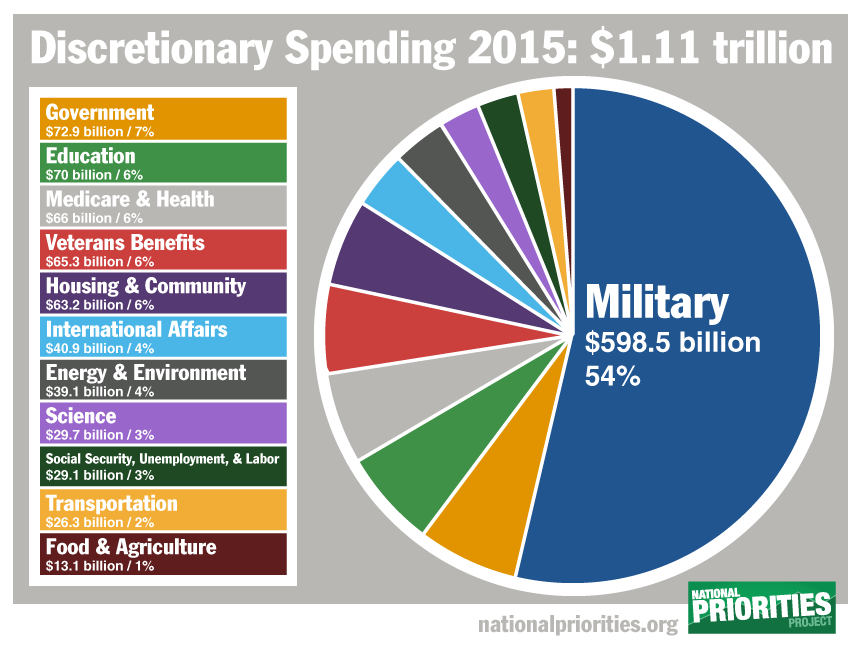
Devastating impacts of nonstop war are all around us in the United States, from deadly federal budget priorities to traumatic effects of normalized violence. And it’s difficult to grasp the magnitude of harm to so many millions of human beings in other countries. Sometimes, while trying to clear away the fog of the USA’s political and media abstractions, I think of people I met in Baghdad and Kabul and Tehran, their lives no less precious than yours or mine.
Norman Solomon is cofounder and national coordinator of RootsAction.org. He was a Bernie Sanders delegate from California to the 2016 Democratic National Convention and is currently a coordinator of the relaunched independent Bernie Delegates Network. Solomon is the author of a dozen books including War Made Easy: How Presidents and Pundits Keep Spinning Us to Death.